
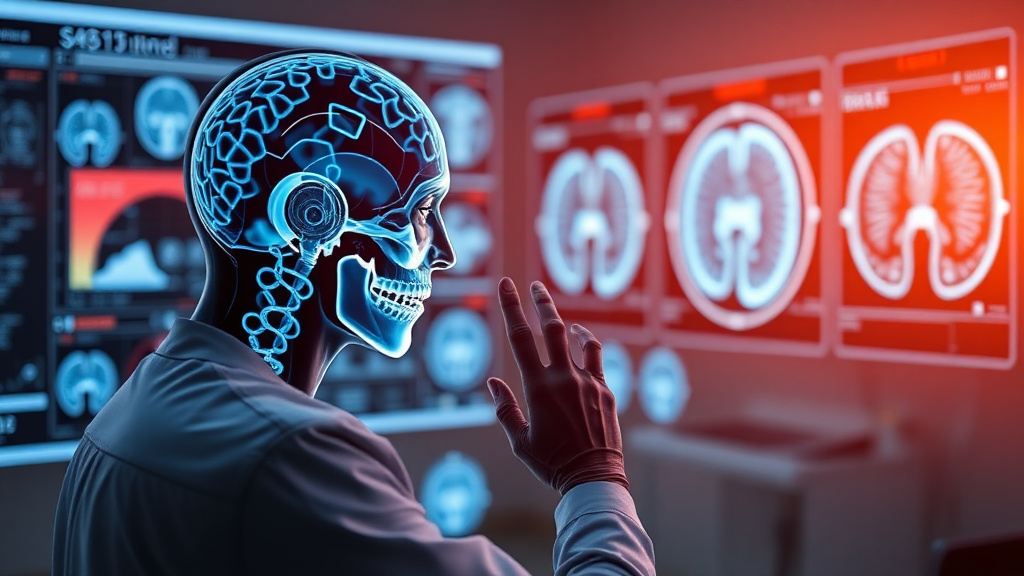
Imagine a world where diseases are identified in seconds with near-perfect accuracy, where human error becomes obsolete, and where patients receive critical diagnoses before symptoms even manifest. This is no longer science fiction—it’s occurring today. Machine learning systems is transforming healthcare diagnostics, utilizing intelligent data processing and sophisticated neural architectures to analyze diagnostic imaging, lab results, and patient data with impressive precision. This article explores how AI technologies are reshaping diagnostic medicine, accelerating treatment timelines, and ultimately saving lives across the globe.
Groundbreaking Effect of AI on Clinical Imaging
AI technology has revolutionized medical imaging by allowing radiologists to detect abnormalities with remarkable precision and efficiency. AI algorithms analyze thousands of images in seconds, identifying subtle patterns that human eyes could overlook. This advancement reduces diagnostic errors, speeds up patient care, and substantially enhances clinical outcomes across multiple imaging techniques including X-rays, CT scans, and MRI scans.
The incorporation of AI in radiology departments globally has delivered significant results, with some systems attaining accuracy levels exceeding 95 percent. These smart technologies work collaboratively with radiologists, complementing their expertise rather than substituting for human judgment. By handling automatically regular scan assessment tasks, AI enables medical professionals to focus on challenging situations, patient interaction, and clinical decision-making, ultimately advancing patient care quality and patient satisfaction.
Machine Learning Models in Radiology
Deep learning models represent the leading frontier of artificial intelligence applications in radiology, leveraging layered network structures to analyze complex medical imaging data. These complex architectures train on extensive collections of labeled medical images, building the ability to recognize abnormal patterns, anatomical variations, and pathological conditions with exceptional accuracy. convolutional networks specifically excel at visual interpretation, identifying key characteristics that separate normal versus pathological structures with medically meaningful accuracy.
The adoption of advanced neural networks in imaging facilities has demonstrated remarkable capability, particularly in recognizing tumors, cardiac disorders, and brain disorders. These models progressively enhance through adaptive training systems, accommodating new information and optimizing their diagnostic capabilities. Radiologists increasingly rely on artificial intelligence-assisted platforms to confirm results, identify critical patients, and deliver complete assessments, fostering mutual cooperation between clinical knowledge and machine learning systems.
- Convolutional neural networks identify tumors in diagnostic imaging accurately.
- RNN models process time-series image data effectively.
- Transfer learning enables quick implementation across different imaging modalities.
- Multi-algorithm approaches combine multiple algorithms for enhanced diagnostic reliability.
- Attention mechanisms emphasize medically relevant areas in diagnostic imaging.
Enhancing Diagnostic Precision and Patient Results
Artificial intelligence systems have demonstrated strong ability in processing sophisticated clinical datasets, often exceeding conventional diagnostic approaches in exactness and uniformity. By analyzing large data volumes and recognizing nuanced variations beyond human perception, AI algorithms can recognize illnesses at initial phases with significantly reduced false positives. This progress results in improved patient outcomes, as timely action becomes possible when treatment is most effective. Healthcare providers now utilize AI-driven systems to develop more thoughtful clinical decisions, shortening time to diagnosis and strengthening therapeutic specificity across various medical fields.
The incorporation of AI into diagnostic processes has significantly altered clinical practice, enabling physicians to allocate their expertise more strategically while machines manage information processing. Actual deployments demonstrate that AI systems attain performance metrics exceeding 95% in many use cases, from radiology to pathology. This synergistic partnership between human expertise and machine intelligence creates a powerful clinical decision-support system. Patients benefit from faster diagnosis, more customized therapeutic approaches, and ultimately superior patient health, while clinical organizations achieve improved efficiency and resource optimization.
Early Disease Detection and Prevention
Early identification of illness constitutes one of artificial intelligence’s most transformative uses in healthcare, enabling clinicians to identify disorders before they progress to later stages. Machine learning algorithms analyze diagnostic information, medical histories, and imaging results to pinpoint high-risk patients with exceptional precision. This proactive approach transforms healthcare from reactive treatment to preventive medicine, reshaping clinical care approaches. Machine learning models can flag minor irregularities that could elude human observation, guaranteeing no critical findings are overlooked during first assessments.
Prevention-focused AI applications are decreasing disease burden and death rates throughout communities, especially for detecting cancer, heart disease, and degenerative neurological disorders. By detecting high-risk individuals in early stages, healthcare providers can implement preventive interventions before severe complications develop. This approach not only improves individual patient outcomes but also reduces overall healthcare costs by avoiding expensive emergency treatments. AI-powered early screening initiatives are turning into routine procedure in leading medical institutions worldwide, showing significant gains in survival outcomes and quality of life.
- AI algorithms detect cancers at initial phases with improved accuracy rates
- Cardiovascular disease screening pinpoints at-risk patients prior to serious episodes
- Predictive analytics flag neurological conditions in pre-symptomatic phases
- Preventive interventions reduce complications and hospitalization needs substantially
- Early detection programs improve five-year survival rates across various disease types
Deployment Obstacles and Future Prospects
Existing Implementation Obstacles
Despite AI’s impressive potential in healthcare diagnostics, substantial implementation challenges persist across the industry. Data privacy concerns, regulatory compliance requirements, and the need for extensive clinical validation slow deployment timelines. Additionally, healthcare institutions must invest substantially in infrastructure upgrades and staff training to integrate AI systems successfully. These barriers, while substantial, are gradually being addressed through joint initiatives between technology companies, medical institutions, and regulatory bodies worldwide.
Incorporating into current healthcare workflows presents another significant challenge for AI adoption. Many hospitals function with outdated systems not compatible with modern AI platforms, necessitating costly and lengthy upgrades. Furthermore, clinician skepticism and opposition to automated decisions demand extensive training programs. Establishing trust between healthcare providers and AI systems demands transparent algorithms, clear explanation of diagnostic recommendations, and validated clinical results that confirm AI’s advantages over traditional diagnostic methods.
Future Outlook and Opportunities
The upcoming trajectory of AI in clinical diagnostics seems remarkably encouraging, with new technological developments positioned to address existing constraints. Sophisticated federated learning methods will enable safe data collaboration across institutions without undermining patient privacy. Next-generation AI models will develop greater explainability, allowing physicians to understand diagnostic reasoning. Sustained commitment in scientific advancement promises even greater accuracy, quicker computational performance, and expanded applications across diverse medical specialties, ultimately revolutionizing international healthcare provision.
